

Integrated methods in the vegetable garden
You have difficulties to improve the fertility of the soil in your vegetable garden!
- Your vegetable plants are stunted, eaten up by pests or affected by diseases!
- The organic treatments you use are ineffective!
In the pages of this website, effective solutions are proposed to answer these frequent problems encountered in the vegetable garden.
The author : Serge BAESEN
- Secretary AFIS-13
- Over 40 years of experience in vegetable and fruit farming in Hendecourt-lès-Cagnicourt in Pas-de-Calais (5,000 m² of former farmland belonging to the Bon Pasteur community in the 1970s) and in Estoublon in the Alpes-de-Haute-Provence (1,600 m²).
Please share this website with your friends and family and anyone else who may be interested in integrated farming methods.
This website is entirely funded by its author. It is not sponsored by any private company, although commercial company addresses are provided to help readers find the recommended tools and materials more easily.
Preliminary notes:
– The site is organised into chapters and articles, which can be accessed by clicking on one of the titles in the menu at the top of each page. At the top of each page, articles belonging to the same chapter are listed in a box on the right-hand side.
– At the bottom of each page, a search engine allows you to find the location of a word on one or more other pages.
– A word written in bold green text links to another page where its definition is explained.
– The ♦ symbol indicates a hyperlink.
– Smartphone : pour une vision correcte des tableaux, une position horizontale de l’écran est préférable.
Integrated farming methods: what are they?
Integrated farming methods, also known as “integrated agriculture”, consist of consistently implementing all farming techniques that enable healthy and economically profitable harvests while meeting environmental protection and human health requirements. These techniques are evaluated using scientific methods. Practices that are not based on scientific evidence are therefore rejected. In summary, integrated farming methods are as follows:
- The preservation of soil biodiversity and humus capital is ensured by periodic additions of organic matter, in particular compost obtained using proven techniques involving a thermophilic phase, as well as by plant cover between crops.
- Organic and industrial fertiliser inputs are precisely adjusted to the soil’s nutrient reserves and the actual needs of plants, which vary throughout their growing cycle. For example, in vegetable crops, carrots need more nitrogen during the first two months to form their leaves, and more potassium in the following months to form their roots. Nutrient reserves are determined by periodic laboratory analyses.
- To reduce the nuisance caused by pests, alternative methods to pesticides are preferred as long as they prove effective. These methods, summarised under the term Integrated Biological Protection of Crops (IBPC), consist of implementing a combination of treatments such as varietal selection, crop rotation and the use of biocontrol processes that counteract the development of pests.
- Forecasting models are put in place Forecasting models are put in place to reduce pest pressure. For example, in protected crops, pest predators are imported in spring as soon as the first aphids appear, which can become very prolific on certain vegetable crops.
- The destruction of pests using plant protection products is not considered unless these pests pose a real danger. Plant protection treatments are only applied if the aggressiveness of the pests exceeds a certain threshold, posing a serious problem for the environment and when the harvest is seriously compromised.
- With regard to weed control, mechanical weeding is preferred over chemical weeding whenever possible (a).
All these measures can be adapted for use in vegetable gardens. Their descriptions and implementation, with specific examples, are outlined in various articles on this website. All these measures have been tested by the author on outdoor and protected crops.
a) Manual or mechanical weeding is ineffective against certain weeds such as horsetail or bindweed because their rhizomes grow deep into the soil. A weedkiller is therefore necessary to destroy these weeds.
Difference between organic farming and integrated farming
When browsing through the pages of this website, some readers may get the impression that there is little difference between organic farming and integrated farming. Certain cultivation techniques are indeed common to both. Other techniques are prohibited in organic farming, such as mineral fertilisers. Organic farming is defined in terms of an obligation of means, while integrated farming is defined in terms of an obligation of results. This translates into differences in cultivation techniques, yields and environmental impacts, the most well-known of which are as follows:
- Like organic farming, integrated farming aims to protect consumer health and the environment. However, integrated farming methods are based strictly on scientific data that has been extensively demonstrated and validated by numerous laboratory and field tests, which is not always the case with organic farming, which sometimes uses remedies whose effectiveness has never been proven (such as nettle manure).
- Organic farming rejects synthetic inputs (fertilisers and plant protection products) for ideological reasons. It is often claimed that anything synthetic is dangerous, hence the exclusive use of so-called natural substances in organic farming, even though these can be as toxic (or even more toxic) than synthetic products. For example, pyrethrins used in organic farming to control pests are also toxic to ladybirds, lacewings and hoverflies, whereas spirotetramat (Movento) is not, as it does not harm predatory bugs, parasitoids and arachnids (a).
- Organic farming rejects certain scientific and technical innovations, particularly in the fields of genetics, agricultural chemistry and plant protection, which is not the case for integrated farming methods. The prohibitions in organic farming complicate the management of authorised inputs in this sector, with negative consequences for soil biodiversity. For example, in the case of a deficiency of a predominant element, in integrated farming only this missing element can be added using industrial fertiliser. This is not the case with organic inputs, the only fertilisers authorised in organic farming, as this type of input always contains several nutrients in varying doses depending on their origin, which can lead to induced deficiencies due to the import of other elements in excess.
- The ban on synthetic pesticides in organic farming has led to an increase in the dose of approved active substances used in this sector and in the number of phytosanitary treatments due to their lower effectiveness. Copper-based compounds against fungal and bacterial infections are often used in organic farming, even though copper is not biodegradable, accumulates in the soil and is toxic to the environment. In integrated pest management, professional farmers often alternate between synthetic and organic plant protection products, which increases the effectiveness of these treatments and reduces the active doses. Synthetic plant protection products are also more targeted, which reduces their impact on the environment (b).
Integrated pest management and biological control: figures that speak for themselves
Comparison of the quantity of fungicides applied in 1998 in the two sectors:
Rational protection : 6 kg/ha
Biological protection : 86,4 kg/ha
Comparison of the total number of phytosanitary treatments in 1998
Rational protection : 12
Biological protection : 23
Source : étude du CIREA de 1994 à 1998
- Excessive use of copper in organic farming to combat fungal infections also disrupts plant nutrition. Excess copper causes chlorosis even in soils that are not normally susceptible to this phenomenon, direct phytotoxicity on the leaves and a reduction in rootlets, sometimes leading to plant mortality (1).
- Organic farming yields are not only lower than those of integrated farming (c), but also more unpredictable due to the difficulties of managing pests, diseases and weeds. Crop rotation in organic farming is much less secure than in integrated farming, sometimes leading to untenable situations for organic farmers, as demonstrated, for example, in France during the bad weather in the summer of 2016 in apple growing (d).
a) This synthetic insecticide is used by professional farmers to control pests on pome and stone fruit trees, lettuce, witloof chicory, cabbage, onions and shallots, spinach and strawberry plants..
b) Most synthetic plant protection products used today and their metabolites are broken down by microflora at varying rates depending on factors such as organic matter content, soil pH and temperature.
c) In 2018, yields for soft wheat were 35 to 40 quintals per hectare for organic farming and 90 to 100 quintals per hectare for conventional farming. Click here for more details ici.
d) Due to damage caused in 2016 by excessive moisture in orchards, organic farmers used synthetic fungicides, leading to the withdrawal of Organic Farming (AB) certification for the farms concerned for a minimum of three years.
An unrivalled knowledge base for amateur gardeners
This website is a technical and practical knowledge base for amateur gardeners. It provides lots of useful advice on maintaining soil, composting in a balanced and healthy way, and helping vegetable plants to better resist pests. Fundamental concepts in agronomy and soil science are explained in layman’s terms to facilitate a good understanding of integrated farming methods.
The first version of this website was mainly aimed at gardeners living in the Provence-Alpes-Côte d’Azur region, taking into account local characteristics. As its success has far exceeded this regional boundary, the texts have been improved for other regions of France and countries with a temperate climate.
By reading the pages of this website, and for small growing areas, you will learn how, in market gardening, you can significantly limit the use of synthetic or organic pesticides to combat many pests by implementing environmentally friendly farming techniques such as biocontrol, crop rotation and varietal selection. Productivity losses are greatly reduced, if not eliminated. However, to achieve this result, you must follow all of the recommendations, which form a whole. If, for example, you neglect soil maintenance, your plants will be poorly nourished and more susceptible to disease.
Some of the advice given on this internal website is difficult to implement in large-scale farming due to the size of the cultivated areas, the technical resources that would need to be put in place, the financial costs involved, and because it is less effective. What is possible on a small scale is not necessarily possible on a large scale. For example, it is difficult to ask a farmer who cultivates hectares of wheat to protect his crops with insect nets or to plough his fields with a spade fork so as not to harm earthworms.
Labels in integrated farming
In integrated agriculture, labels are beginning to emerge that guarantee certified production through laboratory analyses, offering consumers more guarantees than organic farming at a more attractive price. One example is the “zero pesticide residue” label (a). This is also the objective of the collective.« nouveaux champs » created by French market gardeners and arborists, or even by a group of producers« Demain la terre », of the alliance « tomates nature et saveurs » bringing together three French producers: Savéol, Prince de Bretagne and Solarenn (b). I recommend these producers to anyone who does not have the opportunity to maintain a vegetable garden and/or fruit trees.
Die-hard organic enthusiasts claim that these labels are fake organic. Those who practise integrated methods do not claim that their fruit and vegetables are grown using organic farming methods, as not everything is disclosed regarding traces of pesticides approved for use in this sector (c).
a) The absence of residues is determined for each active substance analysed by a result below the limit of quantification (LOQ). The limit of quantification expresses the lowest concentration of the analyte that can be quantified with precision and accuracy. Currently, the performance of measuring instruments leads to a limit of quantification of 0.00001 g/kg for most residues.
b) The tomatoes are guaranteed free of synthetic pesticides and copper, which is prohibited in organic farming.
c) See the article “Some remarks on pesticides approved for use in organic farming – copper and sulphur-based compounds”, in particular the paragraph on organic wines, by clicking here.
Integrated agriculture and the environment
In many cases, integrated farming methods are more environmentally friendly than organic farming. Here are a few examples:
- The volatilisation of ammonia from organic fertilisers (manure, dried blood, etc.) used in organic farming is inevitable, whereas fast-acting synthetic fertilisers such as potassium nitrate used in integrated production are not affected by this loss of nitrogen. For example, losses through volatilisation account for 70% of the ammonia fraction in manure (2).
- The use of synthetic fertilisers in integrated farming to meet the varied needs of plants throughout their growing cycle is more precise than in organic farming, which uses only organic fertilisers (a). The evolution of organic fertilisers cannot be controlled, as it depends on environmental factors that are beyond our control (such as climatic hazards). The use of ammonium nitrate (b) has become the most common form of nitrogen input in integrated farming, and is less associated with ammonia volatilisation.
- Organic farming is less profitable per hectare than integrated farming. To compensate for this lower profitability, the area under organic cultivation must be increased, resulting in a reduction in areas of natural biodiversity.
Further arguments in favour of integrated methods in agriculture are discussed in the following pages of this website, supported by numerous scientific references.
a) For different types of organic fertilisers, the rate of nitrogen mineralisation varies greatly. Factors such as climatic conditions and the physical and biological characteristics of the soil play a role. Between 30 and 80% of the organic nitrogen in poultry manure is mineralised within a few weeks to a few months. In cattle manure, 20 to 40% of the organic nitrogen is gradually mineralised during the growing season following application. On the other hand, compost made from cattle manure and green waste that has undergone a long maturation phase of around 12 months mineralises very slowly – only 10 to 15% of its organic nitrogen is mineralised during the year following its application.
b) Ammonitrates : ammonium nitrate-based mineral fertilisers.
Brief overview of the chapters
Tous les chapitres décrits ci-dessous sont accessibles en cliquant sur l’une des options du menu général situé en haut de chaque page.
The growing medium
Before starting the first crops, a laboratory analysis of a soil sample is essential in order to determine its physical and biological characteristics and its fertility potential. Important concepts in agronomy and pedology are discussed, including the properties of humus and how it is formed. Absorbent complexes and cation exchange capacity are also studied.
Plant roots do more than just extract nutrients. These plant organs participate in the exchange of nutrients with microorganisms concentrated in a specific area of the soil called the rhizosphere, which must therefore be protected. A detour is taken to analyse the characteristics of resistant soils (also known as suppressive soils) where vegetable plants are less affected by soil-borne pests..
Soils that are too rich in limestone, clay or sand can be corrected with amendments to obtain garden soil that is compatible with the cultivation of many vegetable plants. For amateur gardeners, adding compost is the simplest solution for improving the fertility potential of their vegetable garden. However, this should not be done haphazardly. The choice of organic materials and the composting method are described in order to obtain a healthy compost with the qualities of forest mull.
Some theorists who subscribe to agroecology are convinced that we should no longer wage war on weeds (commonly referred to as “bad grass”). However, weeds compete with vegetable plants for food. Weeds play a role in preserving biodiversity, but they are also carriers of disease and provide a refuge for pests. Although their presence is useful in biodiversity corridors, weeds must usually be eliminated from a crop plot to avoid unmanageable complications, such as when polyphagous pests that can survive in weeds become vectors for incurable diseases. Weeds are also incompatible with certain biocontrol methods such as insect nets, which can significantly reduce the use of pesticides (synthetic or certified organic).
For thousands of years, the spade and plough have been the tools of choice for improving the physical properties of cultivated soil. Now there are other methods of soil cultivation that aim to rebuild soil biodiversity. In some techniques that do not use ploughing, soil cultivation is reduced to a minimum or even abandoned altogether. Each method has its advantages and disadvantages. An article describes why ploughing and pseudo-ploughing, alternated with other shallow tillage techniques, are simple, effective and sufficient methods for maintaining a family vegetable garden, provided that a certain amount of compost is added each year to compensate for natural humus losses.
The rationale behind fertilisation in integrated farming.
Vegetable plants have intense and immediate nutrient requirements during certain periods of their growing cycle. Mineral salt reserves in the soil may be insufficient. Subject to uncontrollable factors, organic fertilisers alone cannot precisely meet the requirements of vegetable plants during the most critical periods. The rationale for fertilising a vegetable garden involves the use of mineral fertilisers, mainly to control nitrogen requirements more precisely, which also has the advantage of significantly reducing the loss of soluble elements (particularly nitrates) into the water table.
Like humans, plants become susceptible to disease when they are poorly nourished. Soil that is well supplied with compost, supplemented by precise nutrient inputs throughout the growing cycle, increases plants’ natural defences against pests, yields and taste quality.
With regard to the use of mineral fertilisers, one article describes how easy it is to cheat in organic farming.
Agroecology and biocontrol techniques
Agroecology is a catch-all term that allows any proponent of pseudoscience and mysticism to claim it as their own. However, it is possible to define scientific agroecology based on well-established scientific data, particularly with regard to ecosystem services, while not forgetting to specify its limitations.
Plant predators known as pests are everywhere in nature. As soon as we grow a variety of vegetables, we give pests the opportunity to thrive. But these pests are also prey for their own predators, who take advantage of the opportunity to multiply. Ultimately, a new balance is established, reducing the impact of pests on crops. Some pests, like their predators, are polyphagous, and both can adapt to other hosts and prey when they cannot find their favourite food. It is interesting to understand the interactions between pests, hosts and pest predators in order to promote natural regulation that benefits crops.
Creating biodiversity corridors to achieve natural pest control is not always an easy goal to achieve. Many factors, often beyond our control, can have a favourable or unfavourable impact on crops. In addition, some pests have no known predators in France and pose a threat to the environment. Examples are given to show how ecosystem services can be optimised for the benefit of vegetable crops. It is then that we discover that the choice of certain host plants planted in an ornamental garden next to a vegetable garden plays an important role in regulating pests. On the other hand, other combinations produce contradictory effects or even encourage the establishment of pests.
One article is devoted to an in-depth critical study of one of the best-known disciplines of agroecology, built on mystical and pseudo-scientific foundations: permaculture.
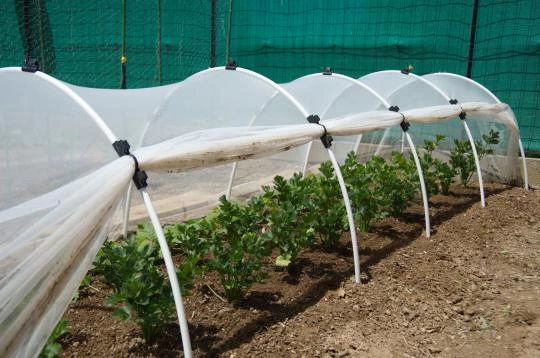
When ecosystem services fail to regulate the population of a pest, other physical or biological means must be used to protect crops before resorting to plant protection products. In market gardening, active biocontrol methods to combat certain pests have become essential because they are often effective. Insect nets are infallible for protecting vegetable plants against certain pests when these vegetable plants do not need to be pollinated (particularly root vegetables and salads). When this is not enough, it is possible to reduce a pest population by introducing their own predators if these are absent or insufficiently present. This type of treatment aims to control the development of pests. For microbial pests (bacteria, fungi and viruses), crop rotation and varietal selection are often the only more or less effective means of reducing their proliferation.
In recent years, biocontrol plant protection products have emerged, such as bacteria or virus cultures designed to parasitise pests, pheromone traps designed to capture reproductive insects, and biodegradable herbicides derived from living organisms to reduce weed growth. Most of the biocontrol methods and plant protection products approved for non-professional use are studied in detail on a page of this website, with a precise description of their advantages and weaknesses. The most common pests are described, along with the biocontrol methods that should be used to combat them.
Synthetic or organic treatments against pests.
Can we really do without all pesticides? Plants are living beings that can get sick and need to be cared for just like pets. In integrated farming, the use of synthetic and/or organic pesticides is decided upon when all other plant protection methods have failed, and especially when a pest poses a threat to the environment.
50% of French consumers who favour organic products are convinced that pesticides are not used in organic farming. However, Bordeaux mixture, pyrethrins, neem oil and other products are approved for use in organic farming and are far from harmless. Several articles describe their properties and the toxic risks they pose to humans and the environment.
The ban on synthetic pesticides in France from January 2019 for private individuals has caused numerous problems, as these pesticides are essential for reducing “regulated harmful organisms”, which must be controlled in order to protect the environment. Synthetic pesticides are also essential for combating fungal and bacterial diseases, which are often uncontrollable using biocontrol methods. A critical analysis of nettle manure, widely presented as an alternative to synthetic pesticides, reveals some surprising findings.
Amateur gardeners have also been greatly affected by the ban on glyphosate in France since 2019, even though all health agencies worldwide have confirmed that this herbicide poses no carcinogenic risk at the recommended doses. One page describes the circumstances that led to this abusive ban, which is unrelated to the actual risks of exposure, using the example of another substance in the same IARC classification, acrylamide, which many French people consume every day without knowing it when they drink their coffee.
For further information.
List of some websites related to integrated farming, biocontrols and the invasion of pseudoscience in agriculture.
The articles on this website are inspired by the following works, among others:
– Guide Pratique de la Fertilisation – 7ème édition – André Gros – La Maison Rustique.
– Le sol vivant – Base de pédologie, biologie des sols – J.M. Gobat, M. Aragno, W. Matthey – presses polytechniques et universitaire Romandes.
– Ecologie – approche scientifique et pratique – 6e édition – Claude Faurie, Christiane Ferra, Paul Medori, Jean Devaux, Jean-Louis Hemptinne – Lavoisier.
– Idées reçues et agriculture ; Parole à la science – Académie d’agriculture de France.
– Eléments de décision pour une fertilisation raisonnée en azote sur les cultures fruitières et légumières ; Ctifl, 31-7-2012.
– Gestion durable de la flore adventice des cultures ; Bruno Chauvel, Henri Darmency, Nicolas Munier-Jolain et Alain Rodriguez, coord. Éditions Quæ
Want to send a comment or suggestion to the author? Please use the form below.
Warning: Any comment relating to prohibited activities (racism, pornography, etc.), or that is offensive or defamatory, will be subject to legal action.