

Introduction to integrated methods in the vegetable garden
The site is organized into chapters and articles accessible by clicking on one of the titles in the menu located at the top of each page. Articles belonging to the same chapter are listed in a box located to the left or at the bottom of the header for smartphones.
chapter Fertilization
Synthetic or organic fertilizers?
Click on ♦ to go to a page in the chapter
⇒ Synthetic or organic fertilizers?
The rationale behind fertilisation in the vegetable garden ♦
Fertilizers-phosphates-cadmium-cancer ♦
Examples of sustainable fertilization for some vegetable plants ♦
The issue of nitrogen assimilation in organic farming ♦
Can a vegetable be forced to grow? ♦
Brief description of some mineral fertilisers ♦
Measurement of nitrate concentration in cultivated soil ♦
It’s easy to cheat in organic farming ♦
Please share this website with your friends and family and anyone else who might be interested in integrated farming methods.
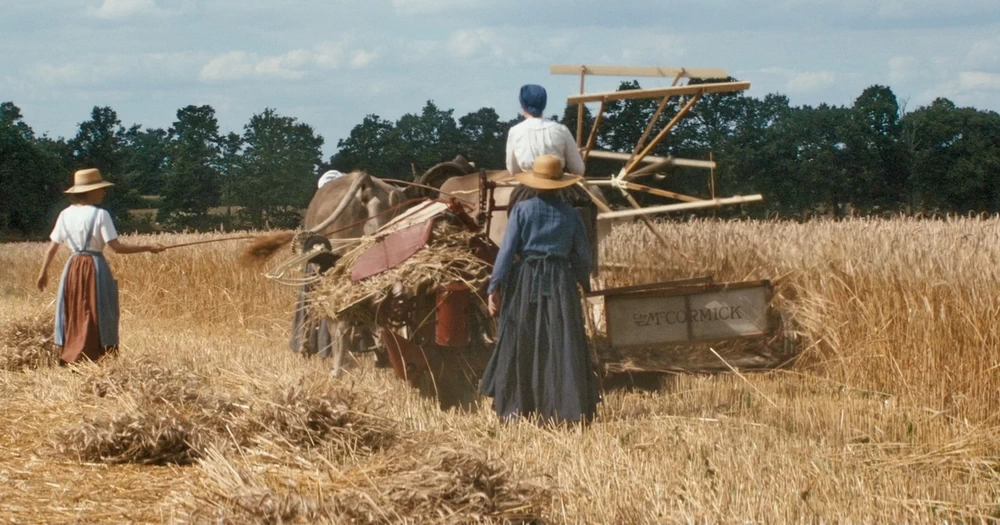
Extract from the film: Les Gardiennes
The aim of agriculture is to produce crops that will be consumed by humans or livestock. These crops contain mineral salts taken from the soil, whose reserves are not infinite. For example, in the Mediterranean region, potatoes export an average of 3.2 kg of nitrogen, 1.6 kg of phosphorus, 6 kg of potassium, 0.4 kg of magnesium and 0.3 kg of sulphur per tonne of tubers harvested (1).
Mineral salts come from the breakdown of parent rock, the decomposition of organic matter, or the activity of specialised bacteria such as nitrogen-fixing azotobacter. The natural breakdown of parent rock is not sufficient to compensate for the loss of mineral salts caused by harvesting. This is particularly the case for certain major substances and trace elements such as potassium, magnesium, boron, zinc, molybdenum and others. If farmers do not take action to compensate for these losses, deficiencies quickly set in, resulting in lost production and susceptibility to disease.
Plants find it difficult to defend themselves against infections when they are poorly nourished. The healing of wounds and the regeneration of organs destroyed by pests are slowed down or even interrupted. Pathogenic bacteria and fungi establish themselves more easily. For example, in potatoes, a potassium deficiency not only reduces yield, but also weakens the potato’s defences, making it more susceptible to late blight. It is also known that plants with adequate potassium nutrition have thicker cell walls, which increases their resistance to lodging and to attacks by fungi and insects.
Plant nutrients
Plants absorb around thirty simple elements, some of which are considered major elements. Among these, nitrogen, carbon, oxygen, phosphorus and potassium are consumed in fairly large quantities. Calcium, sulphur and magnesium, which are also considered major elements, are consumed in smaller quantities. Of all the nutrients, nitrogen is the only element absorbed by plants that does not already exist in the parent rock
Major elements account for more than 99% of plant weight. Other simple elements called trace elements are absorbed in very small quantities, such as manganese, iron, boron, zinc, molybdenum, etc.
Certain trace elements: Cobalt, silicon, iodine and fluorine are only absorbed by certain plants. For this reason, they are not considered essential elements for all plants, whereas they are for humans. Constituent elements such as nitrogen, oxygen and carbon are used by plants to form proteins, carbohydrates, vitamins, etc
Non-constituent elements such as potassium, chlorine, sodium, etc. are used during certain phases of the crop cycle to intervene in biological functions. All these elements are supplied in the form of mineral salts (nitrates, phosphates, sulphates, etc.) or ionised atoms (K⁺ Ca₂⁺ Mg₂⁺ Na⁺) that are soluble in water.
All plants have different mineral salt requirements, and these requirements change over time. It is therefore important for farmers to regulate the supply of these mineral salts throughout the growing cycle.
The introduction of mineral fertilisers into fertilisation more than 50 years ago has always been controversial. Lack of information and fear of “chemicals” have led to an aversion to anything synthetic, which has been exacerbated in recent years by the development of the internet and the proliferation of websites spreading inaccurate claims.
False claims about the properties of mineral fertilisers
In the first half of the 20th century, agronomist Sir Albert Howard was already questioning the artificial nature of synthetic fertilisers, which he believed disrupted the proper functioning of plants. In his view, any inert element such as minerals and chemical fertilisers had a negative impact on plant growth. Artificial fertility replacing natural fertility was potentially harmful. Today, this argument is still being put forward in various forms in publications and on websites.
For example, advocates of all-natural products are convinced that organic crops are in tune with nature because they are fertilised with manure and compost from the living world. But since these mystical claims cannot be accepted by everyone, other advocates resort to more sophisticated assertions with a scientific appearance in an attempt to convince more educated segments of the population. Here is a significant example:
The use of chemical fertilisers in the hope of increasing soil fertility is said to have negative consequences on microflora, leading to an imbalance in biodiversity and soil depletion, ultimately reducing it to a skeletal state. How is this possible? A website provides an answer often cited in environmental circles: “It is one of the principles of natural gardening to nourish the soil, as opposed to chemical fertilisers, which nourish the plant but leave the soil poor.” (emphasis added by the author) (2).
Clearly, the author of this website is unaware that conventional agriculture mainly uses complete fertilisers containing urea or ammonium nitrate, which are gradually converted into nitrate by microflora organisms (bacteria, archaea, etc.).
Urea is a natural substance found in animal urine, which is present in manure. When manure is spread on fields (or added to compost), the urea is broken down into ammonium nitrate and then into nitrate, which can be absorbed by plants. Part of the urea and ammonium nitrate in compound fertilisers is mobilised by soil microflora for its own needs, as is the case with organic manure-based fertilisers.
Thus, complete fertilisers, by nourishing the microflora, contribute to the development of microbial biomass.
However, synthetic fertilisers do not directly add carbon to the soil. But cultivated plants add this carbon to the microflora through rhizodeposition (see the article on the rhizosphere), which can be supplemented by organic amendments (compost, green manure, etc.) and straw incorporation. Thus, mineral fertilisers increase plant production and produce more organic waste (straw, plant debris, root mass, etc.). Mineral fertilisers therefore indirectly generate humus.
Recycling organic matter; inevitable losses
Ideal recycling would consist of returning all the nutrients taken from crops back into the soil. This objective could be achieved through sustainable agriculture based on the model of crop and livestock farming. For amateur gardeners, and in line with this approach, the model of vegetable gardens and small animal husbandry (rabbits, chickens, etc.) is recommended. However, this is more difficult to implement in large-scale farming, especially for cereals, because it requires large areas of grassland and because losses during the various stages of organic matter recycling cannot be avoided for the following reasons:
- The fermentation of composted manure is accompanied by a loss of ammonia into the atmosphere.
- The mineral elements that remain in the soil are not fully absorbed by plants; some are lost through leaching or carried deep underground (lixiviation).
- The evolution of compost incorporated into the soil is also accompanied by gas losses during biological nitrification processes.
- Food consumption is always accompanied by losses of recoverable elements. Some of these are retained by animals and the bacteria they harbour, while others are lost in the form of gas and non-recycled excrement.
- With the widespread use of mains drainage in both urban and rural areas, human excrement is no longer recovered for agricultural use. After treatment in sewage treatment plants, it ends up in the form of nitrates, phosphates and other mineral salts that are released into the environment and end up in watercourses and groundwater. A gold mine lost forever. Barely 50 years ago, the contents of septic tanks were still a valuable source of fertiliser for allotments and farmers.
Note on the origin of organic fertilisers
It is not certain that organic fertilisers purchased from a specialist shop meet the criteria for organic farming in terms of their origin. Organic fertilisers purchased outside the “organic” farm, such as dried blood, ground horn and poultry manure and droppings, often come from conventional farms and are therefore ultimately the result of the conversion of synthetic fertilisers (used to produce animal feed) into organic fertilisers. Some inputs even contain imported GMO residues, which have been “cleaned” by passing through conventional livestock buildings
Vegetable garden and ornamental garden: very different constraints in soil management.
When it comes to managing soil in vegetable gardens, as well as pests and weeds, it is not uncommon to read in certain books and articles on gardening that what is possible in a ornamental garden (such as very moderate or no use of fertilisers) is also possible in a vegetable garden, even though the growing conditions, objectives and constraints are very different. This is even more true for large-scale crops, where the costs of certain solutions that are still possible in a pleasure garden or private vegetable garden (such as hemp mulching and manual weeding) are exorbitant due to the size of the areas involved and the hours of labour required.
In an ornamental garden, plants or parts of plants (such as seeds) are not removed to satisfy food needs. Therefore, there is no export of mineral salts outside the garden; in fact, the opposite is true. Trees, shrubs and flowers maintain the soil’s biomass themselves by seasonally recycling organic elements that remain on site (leaves, twigs, roots, etc.).
Except for accidents related to poor maintenance, climate, the emergence of new diseases, etc., gradually, as in natural forests, the mineral salt reserves in the soil of ornamental gardens increase or remain stable. On the other hand, in a vegetable garden, the mineral salts in the soil are exported with the harvests.
For all food crops, the mineral salts removed must be replaced regularly after each harvest to avoid deficiencies. As with large-scale crops, the fertility of a vegetable garden is maintained by the periodic addition of organic and/or mineral inputs if fallow land is to be avoided.
Production of mineral fertilisers and greenhouse gases
Synthetic fertilisers are rejected in organic farming because the companies that produce them consume fossil fuels and emit greenhouse gases. Compost production generates just as much, if not more, particularly through the volatilisation of ammonia. Industrial fertilisers contain less and less synthetic urea to prevent this phenomenon of ammonia volatilisation. In France, ammonium nitrate has become the main form of nitrogen fertiliser used in conventional agriculture. Unfortunately, ammonium nitrate alone is now banned for amateur gardeners, forcing them to use urea when they need a nitrogen-only fertiliser
For mineral fertilisation, compared to other major elements contained in compound fertilisers, it is the industrial production of nitrogen fertilisers that consumes the most energy. This energy is supplied by natural gas (CH₄), two-thirds of which is used as a raw material to produce ammonia from atmospheric nitrogen, and one-third as an energy source. The energy expenditure for the production of nitrogen fertiliser from atmospheric nitrogen represents only 1% of global energy expenditure (4). Abandoning this industrial production would therefore have no impact on the greenhouse effect.
On the other hand, if organic farming were to be imposed, it would be responsible for a significant increase in greenhouse gases, mainly in the form of methane and nitrous oxide from the composting of organic matter. It is therefore misleading to claim that organic farming is the inevitable solution for reducing greenhouse gas emissions in agriculture. In return, mineral fertilisers fix 4 to 6 times more CO₂ to form biomass, compared to the amount of CO₂ that is consumed during the production, transport and spreading of these same mineral fertilisers (5).
Mineral fertilisers thus enable crops to reach their maximum growth potential, capturing more solar energy and CO₂ from the atmosphere. It should be noted that alternatives exist for when fossil fuels are depleted, such as hydrogen produced by water electrolysis.
Land use in France
In 2015, cultivated agricultural land covered 36% of our territory, grassland 15%, wooded land 31%, artificial land (buildings, roads, etc.) 13%, and the remainder (5%) consisted of heathland, scrubland, garrigue and other land uses (3).
Considering that in France, yield losses in organic farming are around 40% to 50% compared to conventional farming, in order to produce the same amount of food, agricultural land would have to be increased by 50% or even 54%, with the difference (14% to 18%) being taken from forest areas (which would increase to 22% or 16%).
In order to make agriculture sustainable and end dependence on chemical fertilisers, this area reserved for forests will in turn have to be converted into grassland to produce manure, which is largely insufficient.
Ultimately, a return to the old model of crop and livestock farming would require a considerable expansion of cultivated land at the expense of forests, inevitably leading to a loss of biodiversity – the very opposite of what environmentalists want.
In France, due to the number of people now needing to be fed, it is likely that converting all remaining forests into grassland will not be sufficient to meet the organic input requirements of organic farming.
Sustainable agriculture existed before the invention of fertilisers, but it could barely feed 20 million French people in the 18th century, for example, and only when weather conditions were favourable with reduced pest pressure, which was not always the case. These random and uncontrollable conditions occasionally led to famines.
Today, in France, we need to feed three times as many people with the same total land area.
The consequences would be even worse if countries such as India, China and others with populations of over 100 million decided tomorrow to convert all their agricultural land to organic farming, using crop and livestock farms as a model. No one in these countries is seriously considering going down this path, except for a few ignorant and irresponsible extremists claiming to be part of the environmental movement.
The dream of sustainable agriculture that is self-sufficient therefore remains a very difficult goal to achieve, unless significant progress is made in the near future in new genome editing technologies to increase production, reduce water consumption for irrigation, and create plants capable of surviving in poor soils. This technology is also rejected by environmentalists.
Are mineral fertilisers responsible for the degradation of soil biodiversity?
Mineral fertilisers are believed to be responsible for the degradation of soil biodiversity. However, this is also true of organic fertilisers. It is mainly the excessive use of chemical and/or organic fertilisers that has a harmful effect on soil microorganisms, which in turn degrades soil fertility and pollutes the environment. Careful use in line with the needs of plants throughout their growing cycle does not have this disadvantage.
By increasing the fertility potential of the soil, all fertilisers have a positive effect on the growth and abundance of certain living organisms in the soil. However, they also lead to a decline in species adapted to nutrient-poor environments. Most cultivated plants need nutrient-rich soil, especially vegetable crops, which requires correcting the fertility potential of the soil.
Regardless of the method used to improve soil using organic or mineral inputs, there is always an increase in fertility potential, which results in changes to the environment. Irrigation also has an impact on biodiversity by creating negative competition with plants that survive in arid areas. We would be justified in worrying about this change in biodiversity if it resulted in a reduction in the services provided to farmers by ecosystems, but this has not been demonstrated. In short, should we abandon agriculture on the pretext of preserving natural biodiversity? Who is prepared to return to the prehistoric days of hunting and gathering?
It is said that mineral fertilisers acidify the soil, which is true, except that organic fertilisers have the same effect. This acidification occurs when these fertilisers are converted into nitrate (see article: soil acidity and alkalinity).
711
This acidification also significantly reduces cadmium concentrations in plant tissues. Soil acidification likewise curbs the development of common diseases such as Fusarium wilt. This soil-borne fungus attacks plants through their roots; as it spreads, it blocks the vessels that supply water and nutrients to the crops. In the early stages of the disease, plants turn yellow and wilt before eventually dying. Prevention is the only remedy for Fusarium wilt; consequently, selecting acidifying mineral fertilizers is crucial to combating this formidable pathogen, which is found on every continent.
1) Fatah AMEUR. Recherche de meilleures pratiques agricoles pour la culture de la pomme de terre – Ecole nationale supérieure agronomique El-Harrach Alger
2) Potager duable : Connaissez-vous cette plante spectaculaire qui permet d’enrichir la terre et de fleurir le potager ? ♦
3) Portail de l’artificialisation des sols ; panorama de base de données TERUTI LUCAS ♦
4) Réponse à l’écologisme – comment la connaissance permet de réfuter les peurs entretenues
5) UNIFA parlons fertilisation ; durabilité des ressources le-raisonnement-de-la-fertilisation/phosphore-potassium-et-magnesium ♦