• Homepage
  • Crop soil
    • Crop soil ; Essential laboratory analyses
    • Texture and structure of cultivated soils
    • Agilo-humic complex and cation exchange capacity
    • Other interesting data that can be included in a laboratory analysis
    • Acidity and alkalinity of agricultural soils
    • Humus; formation and evolution
    • Soil fertility; is the apocalypse coming?
    • The microbial world and soil fertility
    • Rhizosphere, mychorizae and suppressive soils
    • Correction of very clayey or too calcareous or too sandy soils
    • Estimation of humus loss from a cultivated soil
    • Compost production for a vegetable garden
    • The different phases of hot composting
    • Weed management in the vegetable garden
    • Ploughing or no-ploughing?
    • The rotovator, the spade fork and the grelinette
  • Fertilization
    • Synthetic or organic fertilizers?
    • The reasoning behind fertilisation in the vegetable garden
    • Examples of rational fertilisation for some vegetable plants
    • The problem of nitrogen assimilation in organic farming
    • Can you force a vegetable?
    • Brief description of some mineral fertilizers
    • Nitrate measurement tools
    • It is easy to cheat in organic farming
  • Biocontrol
    • Integrated Biological Protection (IBP)
    • Scientific agroecology and ecosystem services in the vegetable garden
    • Vegetable garden and biodiversity areas
    • Permaculture; an example of pseudo-science and mysticism in agriculture
    • Mandatory control of regulated pests
    • Nets insect-proof
    • Imports of beneficials against bio-agressors
    • Imports of beneficials against aphids
    • Imports of beneficial insects against whiteflies and mealybugs
    • Imports of beneficial insects against chafer larvae, wireworms, cutworms and tipulas. Control of ants
    • Imports of beneficial insects against mites, thrips and bugs
    • Rotations in agriculture
    • Varietal choice in agriculture
    • Solarisation, false seeding and tillage in frosty periods
    • Biocontrol plant protection products
    • Biostimulants
    • Other methods of limiting disease risks in agriculture
  • Treatments
    • Organic or conventional treatments against pests
    • Some remarks on pesticides registered in organic farming
    • Copper and sulphur based compounds
    • Pyrethrins
    • Neem oil and spinosad
    • The virtues of nettle manure under the magnifying glass
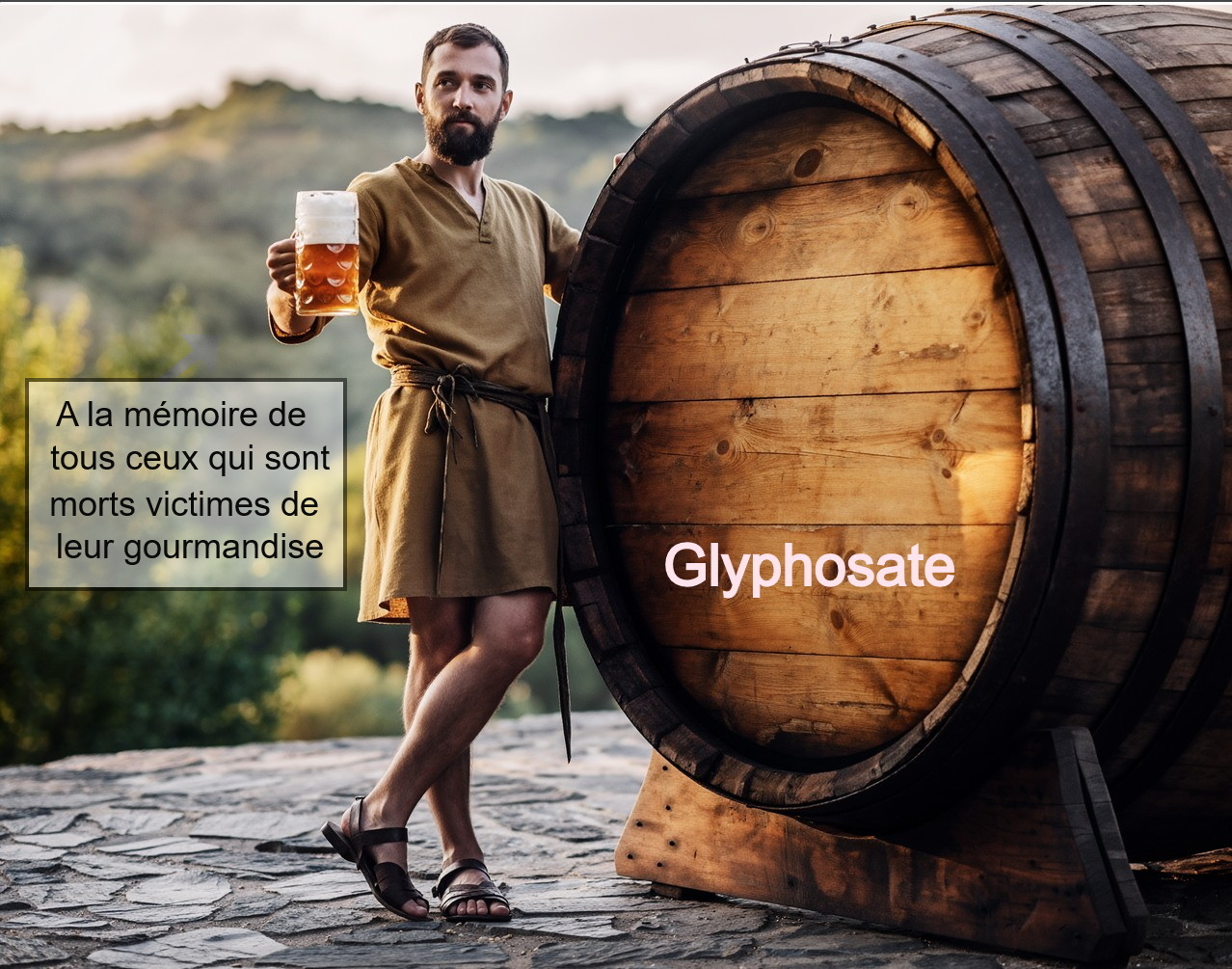
  • ⇒ Glyphosate; toxicity and risks of exposure.

Introduction to integrated methods in the vegetable garden

Organic or conventional treatments against pests.

Chapter : Treatments

Previous or next articles ; click on a title to go to the page

⇒ Organic or conventional treatments against pests.

- Some remarks on pesticides registered in organic farming.

- Copper and sulphur based compounds.

- Pyrethrins.

- Neem oil and spinosad.

- The virtues of nettle manure under magnifying glass.

⇒ Glyphosate; toxicity and risks of exposure.

In 2015, the IARC (International Agency for Research on Cancer), an offshoot of the WHO, classified glyphosate as a probable human carcinogen (Group 2A). A few months later, the EFSA (European Food Safety Authority) and the ECHA (European Chemicals Agency) published their own expert reports stating that glyphosate is not carcinogenic, mutagenic, or toxic to reproduction in humans.

Why such a difference in assessment? Exposure

The IARC takes into account in vivo and in vitro studies but ignores publications whose authors have links to industry. On the other hand, health agencies include industry studies that are refuted by environmental organizations on the grounds that these studies are not objective. Health agencies are also accused of being influenced by particularly aggressive lobbying by Monsanto-Bayer, the manufacturer of glyphosate-based products.

When all health agencies reach the same conclusions, as is the case with glyphosate, there is a strong consensus that is difficult to question. This is true for the current consensus on climate change, vaccines, electromagnetic waves... and why not glyphosate? However, it is the consensus opinion of health agencies that is being challenged by anti-glyphosate activists, even though it does not contradict the conclusions of the IARC, as their objectives and criteria are not the same.

Let us begin by studying the classification criteria and the content of the table of probable human carcinogens established by the IARC.

Group 2A, which includes glyphosate, covers substances with limited evidence of carcinogenicity in humans but sufficient evidence of carcinogenicity in animals. This list emphasizes the danger associated with the agents, but does not take into account the risk associated with the dose, i.e., the probability of developing cancer given the level of exposure to the carcinogen. It is up to health agencies such as EFSA to take this into account and draw conclusions. This difference in assessment of a molecule considered dangerous is important, without which it is impossible to define the protections that must be put in place to protect oneself and when they become useless.

It is interesting to take as an example another molecule appearing in group 2A: acrylamide..

The IARC list can be viewed by clicking here.

Why choose acrylamide?

Excerpts from the CIRC nomenclature

The IARC list can be viewed by clicking ici

Excerpts from the name Acrylamide forms spontaneously when foods rich in carbohydrates and proteins are cooked at high temperatures (above 120°C). This substance is present in coffee following roasting, but also in many other products subjected to high temperatures, such as roasted almonds, French fries, and even certain cooked vegetables.

Since glyphosate belongs to the same classification as acrylamide, why is no one calling for a ban on coffee? Why is so much energy being expended to combat the use of glyphosate, and nothing against coffee, which contains a substance recognized as a probable carcinogen in the IARC classification?

Because there are no scientific studies showing that coffee consumption increases the risk of cancer. The amount of acrylamide in coffee is so low that to reach a worrying level of cancer risk, you would have to drink at least 1,000 cups of coffee a day.

To quote Paracelsus, “Everything is poison and nothing is without poison; only the dose makes something not a poison.” The lower the exposure to the carcinogen, the lower the risk of developing cancer. This risk is virtually zero when exposure is 700 times lower than the dose considered toxic (a).

The IARC has established that glyphosate is carcinogenic at doses much higher than those used to destroy weeds, i.e., approximately 1,000 times the recommended dose in agriculture (b). However, the risk to farmers is not zero. It is mainly when handling containers of glyphosate concentrate that the risk of toxicity becomes a concern if the necessary precautions are not taken, a situation sometimes encountered in rural areas where some farmers do not wear personal protective equipment and are exposed to inhalation for years. Such negligence has led to accidents that have resulted in widely publicized lawsuits supported by anti-glyphosate activists.

EFSA and Monsanto publications

Regarding independent studies, the EFSA is accused of having copied verbatim the dossier submitted by Monsanto. Almost all the studies showing a harmful effect of glyphosate were allegedly declared unreliable. The EFSA maintains that it evaluated the studies submitted by industry independently. Dismissing a copy of a text only makes sense if its content is flawed. Should we then rely on robust data that contradicts the documents provided by industry? Otherwise, if experts deem the study correct, why should it be ignored?

If some research studies were not considered by health agencies, it is because they did not meet the criteria for substantiating the claimed results and the risks involved. Everything must be verified: the protocol used, the origin of the products tested, the measurement methods, the number of trials, the nature and number of participants in the cohorts, potential biases, and so on. To identify the hazards and risks of exposure to a substance, the EFSA conducts a comprehensive analysis of all scientific publications, but not haphazardly. Studies are accepted if they comply with the rigorous and mandatory criteria defined in particular in European Union Regulation No. 283/2013. Given that glyphosate is a highly sensitive issue, it is certain that each publication has been scrutinized by the EFSA and other health agencies, especially since Monsanto has been ordered several times to pay compensation to individuals.

Several studies, including a 2019 meta-analysis, claim that farmers most exposed to glyphosate have an increased risk of developing non-Hodgkin lymphoma (1), a rare cancer even in this context. However, the World Health Organization's Joint Working Group on Pesticide Residues (JMPR) emphasizes that the Agricultural Health Study (AHS) published in 2004 is the only high-quality prospective study and that it does not demonstrate a causal link.

Therefore, to date, there are no serious scientific studies showing that the recommended dose of glyphosate in agriculture presents a carcinogenic risk as long as the recommended precautions are applied. This is specified in the INRS summary sheet accessible by clicking here.

Glyphosate and non-Hodgkin lymphoma

Meta-analyses have strengthened the presumption of a link between glyphosate and the risk of non-Hodgkin lymphoma in farming populations. However, several recent studies, including a cohort analysis (Andreotti et al., 2018) specifically on glyphosate exposure using the most up-to-date monitoring data, show no association and no dose-response effect has been demonstrated. The Joint Working Group on Pesticide Residues (JMPR) of the World Health Organization has emphasized that the Agricultural Health Study (AHS) is the only high-quality prospective study.

It is worth noting that the Agrican cohort study in France (c), which includes more than 180,000 people from the French agricultural sector, shows that mortality among farmers who are the main users of pesticides is lower than or equal to that of the general population for all forms of cancer. In terms of mortality, there is no higher than normal mortality among farmers, regardless of the type of cancer. On the contrary, their mortality is significantly lower than that of the general population for most types of tumors, whether or not farmers use pesticides.

Thus, to date, there is no robust scientific study showing that the dose of glyphosate recommended for agricultural use presents a proven carcinogenic risk as long as the recommended precautions are applied. This is specified in the INRS summary sheet accessible by clicking here.

A very detailed study by the CNRS on the health risks of glyphosate and glyphosate-based formulations is also available here.

a) Endocrine disruptors, which act at very low doses, do not obey this rule, but their effects on organisms are very different (they disrupt hormone action). Although the data in the literature is contradictory, EFSA published a report in 2017 stating that glyphosate was probably not an endocrine disruptor, leaving the debate open.

b) Since October 2020, glyphosate is authorized at 1080 g/ha/year only in situations of no-till or summer-early autumn tillage in hydromorphic soil or in the presence of regulated weeds (ragweed is mainly concerned in certain departments), in the latter case the dose can go up to 2880 g/ha/year.

c) https://www.europeanscientist.com/fr/opinion/pesticides-et-cancers-chez-les-agriculteurs-la-fuite-en-avant-vers-lirrefutabilite-premiere-partie/


Toxicological characteristics of glyphosate are detailed in the INRS summary sheet.

Toxicokinetics – Metabolism
Glyphosate penetration through the skin is limited (less than 3% in rats). It is minimally, if at all, metabolized in animals and does not accumulate.

Experimental Toxicity

Acute Toxicity
The acute toxicity of glyphosate is low via the oral route. Inhalation exposure causes sometimes severe lung damage, as well as liver and kidney damage. Mild skin irritation and severe eye irritation have been reported.

Subchronic and chronic toxicity
Subacute and subchronic oral studies show low toxicity of glyphosate.

Genotoxic effects
The mutagenic potential of glyphosate has been evaluated in numerous in vitro and in vivo tests, which have not shown any genotoxic effects.

Carcinogenic effects
Various chronic toxicity studies have not revealed any carcinogenic potential for glyphosate.

Effects on reproduction
No effects on reproductive parameters have been observed, and studies conducted on rats and rabbits have not revealed any teratogenic effects of glyphosate at doses that are not toxic to the mothers.

Human Toxicity
There are no data on exposure to glyphosate alone, only to commercial preparations. Acute exposure to these preparations is generally irritating, even caustic, to the skin and mucous membranes. Allergic reactions have been reported. Intentional or accidental ingestion leads to severe damage that can be fatal. The presence of surfactant in the preparation has been implicated in the frequently observed pulmonary complications. Repeated exposure causes contact dermatitis. An increased risk of developing certain blood disorders has been reported, but no conclusions can be drawn at this time. There are no data on genotoxic or reproductive toxicity effects.

The intense controversy surrounding glyphosate, sparked in recent years by sensationalist journalists and NGOs, has produced numerous negative consequences and distortions, preventing the general public from distinguishing fact from fiction. The confusion between hazard and exposure level is perpetuated either through the authors' ignorance or deliberately to create a climate of fear. Unfortunately, the teaching of food toxicology is diminished in many scientific programs, including medical schools, which explains why some scientists are unable to differentiate between hazard and risk.

Glyphosate detractors are on the lookout for any unfavorable scientific publications. They claim that glyphosate could impact the nervous system, leading to memory problems or depressive syndromes, or even alter gene expression, microbiota development, and apoptosis of abnormal cells... (the numerous other favorable studies, over 1,500 in the last decade, are ignored by glyphosate detractors). But all these unfavorable studies often suffer from the same flaws: methodological biases, a lack of rigor, and the absence of a correlation between negative effects and real-world human exposure. Some studies are sponsored by organizations and companies known for their anti-glyphosate activism ; lobbying and conflicts of interest are not always the work of Monsanto-Bayer. Here are a few examples that have made headlines in the media, on TV, and on social networks:

►

In December 2008, a study from the University of Caen, published in the journal Chemical Research in Toxicology, attempted to highlight the impact of various glyphosate-containing formulations on human cell lines. The authors reported various cell damages (necrosis, asphyxia, DNA degradation, etc.) allegedly induced by glyphosate, its degradation product (AMPA), or an adjuvant present in some preparations. This study was heavily criticized by the scientific community. The French Agency for Food, Environmental and Occupational Health & Safety (ANSES, formerly AFSSA) highlighted three methodological errors:

•

The cells were subjected to a pH of 5.8 without a buffer solution for 24 hours. This did not allow observation of the effect of glyphosate, but more likely the effect of an acidic, hypotonic solution on cells. Animal cells tolerate a pH between 7.4 and 6.8 and require a precise ionic environment to survive. In the absence of control cells treated under the same conditions, the effect of glyphosate cannot be confirmed.

•

Observations of cell death cannot be extrapolated to the behavior of the entire organism. Many substances cause local cell death without being toxic to the whole organism; this is notably the case with certain disinfectants (some components of eye drops, for example).

•

The agency believes that "the authors of the study overinterpret their results regarding potential health consequences for humans, particularly based on an unsupported in vitro in vivo extrapolation."

►

In 2010, Argentinian scientists attempted to assess the effects of low doses of glyphosate on development by studying vertebrate embryos. Their study, published in the journal Chemical Research Toxicology on August 9, 2010 (1), notably states that the treated embryos are highly abnormal. This is also a questionable experiment, as the solution used contained a concentration of 72 to 192 mg of glyphosate per liter, which is 720,000 to 1,900,000 times higher than the maximum permitted dose for drinking water in France.

1) lyphosate-Based Herbicides Produce Teratogenic Effects on Vertebrates by Impairing Retinoic Acid Signaling

►

One of the most controversial and widely publicized studies against glyphosate was conducted in 2012 by molecular biology professor Gilles-Éric Séralini on the toxicity of Roundup and Monsanto's NK603 GM corn. This researcher, a co-founder of GRIIGEN, which opposes the cultivation of genetically modified plants, received support from Elise Lucet in a report by Envoyé Spécial and Le Nouvel Observateur on September 20, 2012, which published an article entitled: "YES, GMOs ARE POISON." However, Gilles-Éric Séralini's study was met with almost unanimous criticism from the scientific community before being invalidated by three large-scale European studies. The study was retracted from the prestigious journal Food and Chemical Toxicology, which had initially published it (it was republished in June 2014 in open access in the German journal Environmental Sciences).

None of the investigative journalists corrected Éric Séralini when he claimed in a report that tap water containing a glyphosate dose of 0.1 micrograms per liter (permitted by regulations) is chronically deadly, which is false. The publication of Gilles-Éric Séralini's study was the subject of a media frenzy orchestrated by a communications agency funded by certain major retailers eager to enter the non-GMO market. A confidentiality agreement was even signed between Gilles-Éric Séralini and some members of editorial staff, such as that of Le Nouvel Observateur. To learn more about this affair, click here.

►

929
The Italian Ramazzini Institute, known for its partisan stance against pesticides, published a study in its journal in the summer of 2025 claiming to provide significant evidence of a dose-related increase in benign and malignant tumors in rats exposed to glyphosate. This study was promoted by a wide range of NGOs, activists, and sensationalist journalists, political organizations, and interest groups in the US litigation sector. This study aimed to contribute significantly to the debate surrounding the health effects of glyphosate, but the scientific weaknesses of this publication did not attract much attention from the newspaper L'Humanité, Europe Ecology, Le Monde, local newspapers such as Ouest-France, and others. The study was critically analyzed by the renowned biostatistician Robert Tarone in "The Firebreak," a summary of which follows:

•

The results provided by Ramazzini's researchers suffered from flawed statistical analysis (using incorrect approximate p-values rather than much higher exact p-values), meaning that the number of significant tumor trends was actually very small.

•

The funding for the research was tainted by undeclared conflicts of interest (particularly from the American litigation sector).

•

The article's publication process was biased (in a journal controlled by Ramazzini and reviewed by an activist from the Pesticide Action Network).

•

The researchers drew conclusions despite the lack of statistically significant evidence in their results tables.

•

The researchers chose not to cite or discuss an important study on tumors in rodents that contradicts their findings.

•

The summarized results of IARC monograph 112 concerned only observed adenomas, with no apparent progression to carcinomas.

•

The three groups exposed to glyphosate in the Ramazzini study all showed no evidence of a trend in tumor incidence across all anatomical sites.

A translation of the article containing more details on this critical analysis is available by clicking here.

More recently, an article published in 2000 by Williams et al. on the safety of glyphosate in the peer-reviewed journal *Regulatory Toxicology and Pharmacology* was retracted on grounds of scientific integrity, 25 years after its publication. This retraction, predictably, triggered a media campaign by anti-glyphosate groups, amplified in the local press and on social media. This article, accepted in 2000 by health agencies, presented evidence of glyphosate's safety and relied on data provided by the industry. Furthermore, a letter leaked during the preparation of legal proceedings against Monsanto allegedly revealed that the company had participated in writing the article.

The retraction of the article is therefore not based on manipulated data or flawed methodology. The EFSA had already reacted two years ago to this article and the evidence presented, stating that industry involvement had been declared and that the way the article was written did not compromise its scientific content. It is interesting to note that the co-editor of the journal that retracted the article (Mr. Martin van den Berg) is known for his activism against industry and gained notoriety in the early 2000s for his rudimentary blood tests to support NGO campaigns against brominated flame retardants. Further details on this case, which contain other interesting information on the reasons for this retraction, are available by clicking here.

Finally, studies have shown that glyphosate is also an antibiotic and that it degrades the soil microbiome. It can chelate calcium and magnesium, reducing their absorption by plants. These concerns have never been confirmed in soil conservation techniques (particularly no-till farming) where glyphosate is used to destroy cover crops. In fact, the opposite is true: the objective of these farming techniques, widely used especially in the USA, is to restore soil biodiversity. Again, these studies have nothing to do with the reality of agricultural practices and the consequences related to the doses used. It is difficult to imagine how such a priority as restoring soil biodiversity could be thwarted by the application of a toxic substance that would poison the microflora.

launch facebook
launch twitter
launch linkedin
launch pinterest
launch snapchat
launch instagram

Specify a search word ⇒

The search will be conducted in all chapters and articles